
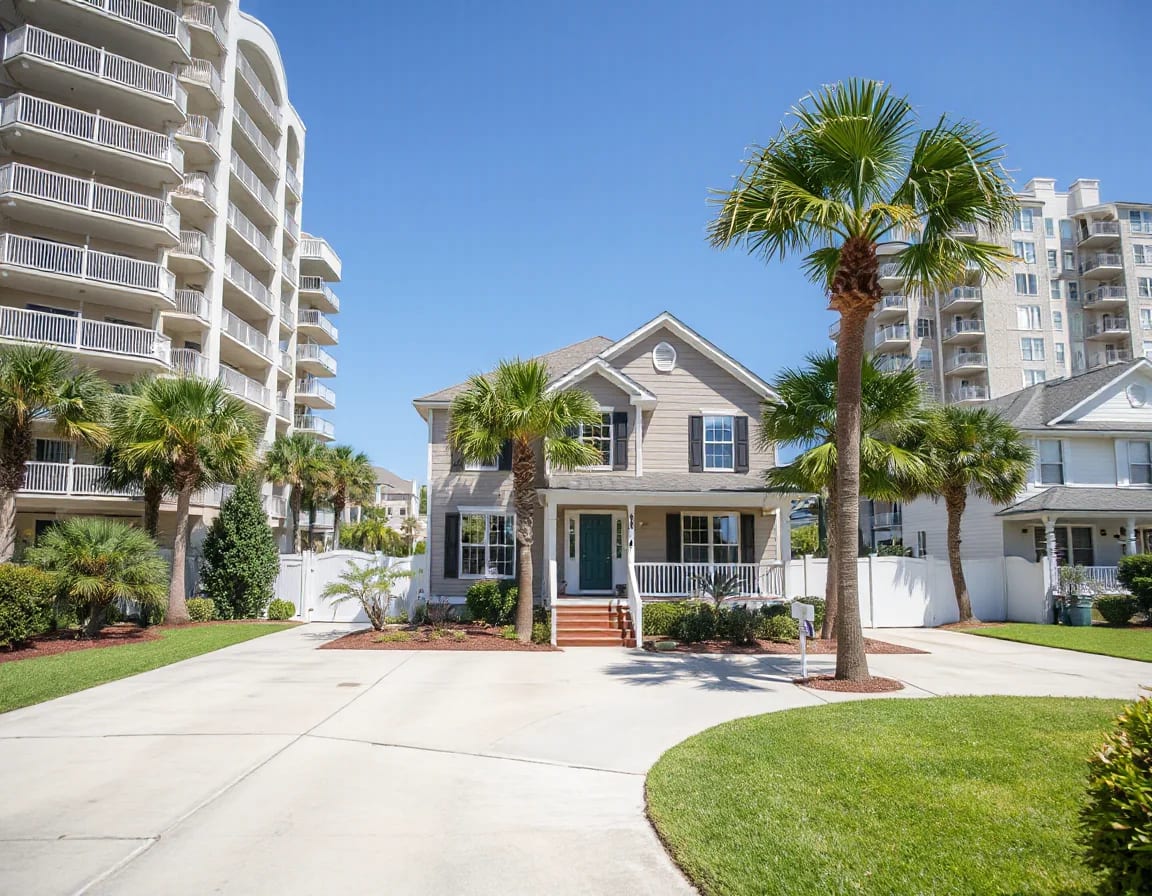
A condo and a detached house can post similar list prices in Myrtle Beach, but the monthly cost of ownership often tells a different story. Buyers who only compare mortgage payments can miss HOA dues, insurance differences, maintenance timing, parking realities, and how often they will actually use the features they are paying for. This guide breaks down five lifestyle costs that deserve a close look before you decide which property type fits your budget and daily routine.
Price Is Only the Starting Point
When buyers compare a Myrtle Beach condo to a house, the conversation often starts with list price and square footage. That makes sense, but it is only part of the equation. Two properties can look close on paper and still feel very different once recurring costs, upkeep, and day-to-day convenience enter the picture. A condo may offer shared amenities and less exterior maintenance, while a house may provide more control over the property and fewer association rules, but each option carries expenses that show up long after closing day.
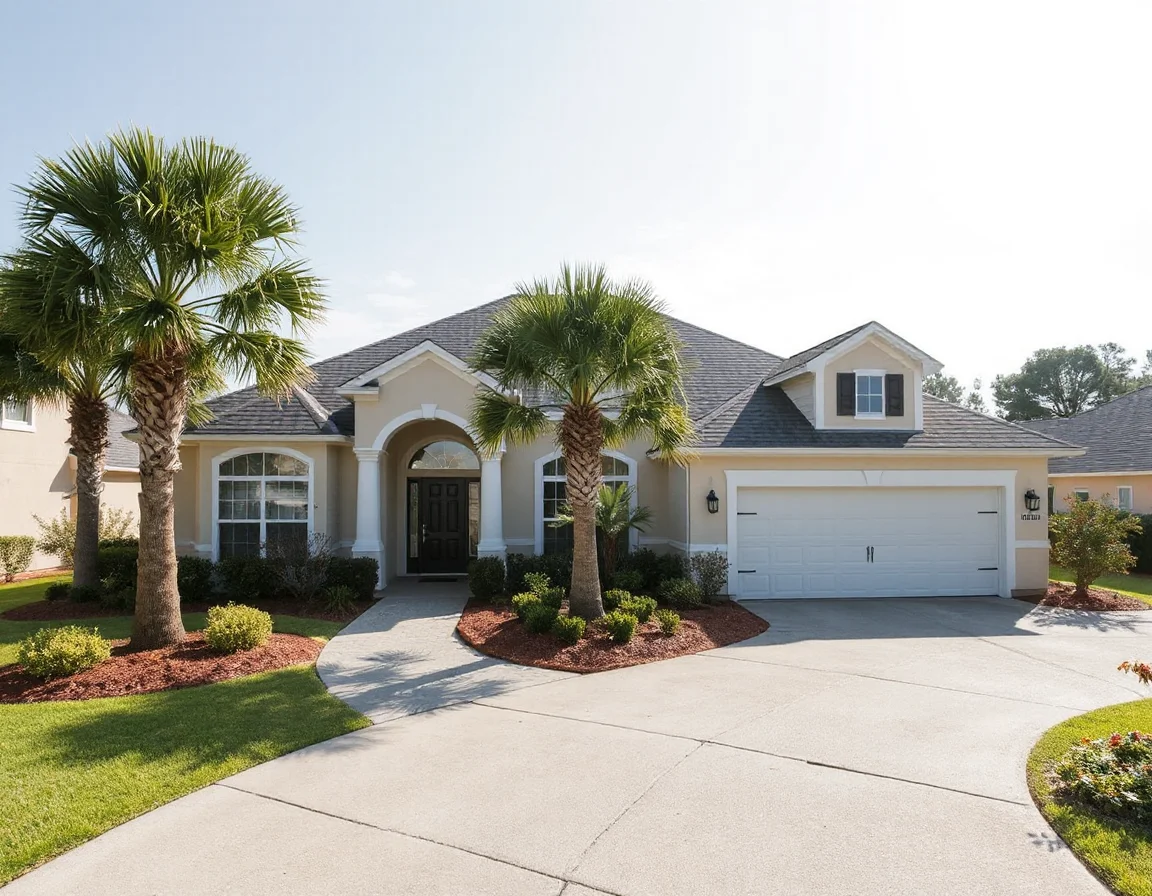
Along the Grand Strand, this choice is especially important because ownership costs can be shaped by proximity to the coast, storm exposure, building age, and whether major systems are maintained individually or through an association. A house may require you to budget for roofing, landscaping, and exterior repairs directly. A condo may package some of that into dues, but the total monthly number can still climb if the building has extensive amenities or upcoming projects.
Looking beyond the advertised payment helps buyers avoid a common mistake: choosing a property type for the purchase price alone instead of the full ownership experience. The better question is not just What can I buy? but also What will this cost me to live in comfortably over time?
1. HOA Dues and What They Actually Cover
Condo buyers usually expect association dues, but many underestimate how much those fees influence affordability. In some communities, dues cover exterior maintenance, common areas, water, trash service, building insurance, amenities, and reserve funding. In others, coverage is narrower, leaving owners with more separate bills than expected. A higher monthly HOA is not automatically a bad sign if it offsets major ownership tasks you would otherwise pay for on your own.
A lower list price can be quickly offset by a higher monthly HOA, so it helps to compare total monthly housing cost rather than sale price by itself.
With a house, there may be no HOA at all, or there may be a smaller neighborhood fee that covers limited shared features. That can make the monthly payment look simpler at first glance. Still, the absence of large dues does not mean the property is cheaper to own. It often means the owner is directly responsible for more maintenance and repair categories that a condo association may handle collectively.
Before choosing either path, buyers should ask for a clear breakdown of what is included. The line items matter. Roof replacement, exterior painting, pest control, cable service, grounds care, and amenity maintenance all affect your real monthly obligation.
2. Insurance Can Look Different Than Expected
Insurance is another area where condo and house ownership can diverge more than buyers expect. For a detached house, coverage often needs to account for the full structure, your belongings, and liability, with costs influenced by age, location, construction type, and storm-related considerations. For a condo, the association may insure parts of the building, while the owner carries an interior or walls-in policy plus personal property and liability coverage.
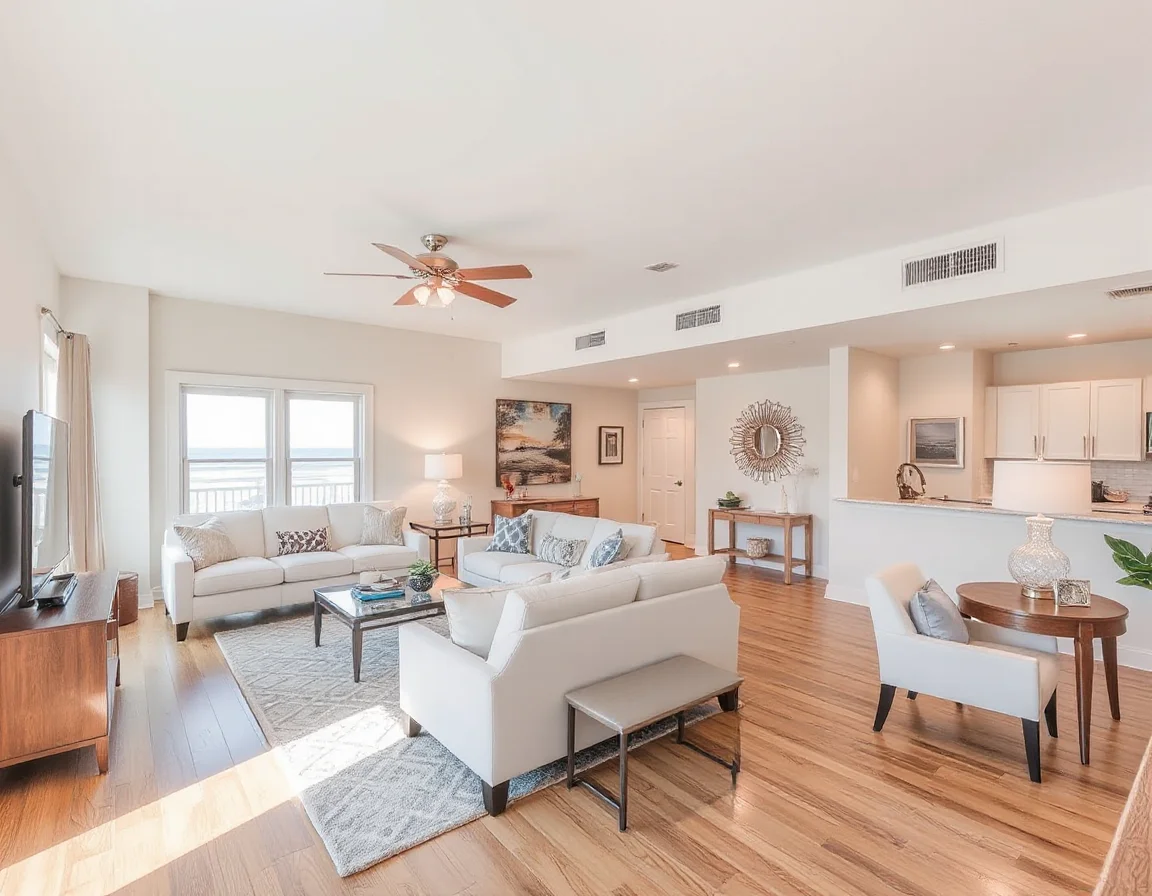
The key detail is that “someone else covers the building” does not always mean your out-of-pocket costs will be minimal. Deductibles, special building assessments tied to insurance changes, and coverage gaps can affect condo owners. Meanwhile, house owners need to plan for premiums that may be higher than expected depending on property specifics and replacement costs.
It is worth getting insurance estimates early, not after you have narrowed your decision emotionally. A condo that seems less expensive on paper may lose some of its advantage if the monthly dues and insurance combination rises above your comfort level. A house that stretches your budget at closing may become more manageable if it avoids some recurring association costs and gives you flexibility over maintenance timing.
Insurance quotes are most useful when gathered before offer time, because they can change how a “best value” comparison looks between two otherwise similar properties.
3. Maintenance Is Either Direct or Shared, Never Free
One of the biggest lifestyle differences between a condo and a house is how maintenance shows up in your life. With a house, there is more independence, but there is also more direct responsibility. Lawn care, pressure washing, exterior repairs, driveway upkeep, and major systems all become part of your planning. Some buyers welcome that control. Others prefer a setup where more of the exterior work is coordinated through an association.
Condo ownership can reduce hands-on maintenance, yet it does not eliminate the cost. Shared maintenance is usually built into dues, and large capital needs may lead to assessments. If the building is older or if amenities are extensive, future projects can become a significant budget consideration. Reviewing reserves, recent projects, and the condition of common elements can reveal whether the current monthly dues appear sustainable or if larger expenses may be on the horizon.
For buyers deciding between convenience and control, the real question is how involved they want to be in ongoing property care. Time has value too. If you prefer fewer exterior tasks, a condo may align better with your schedule. If you want authority over materials, timing, and repair decisions, a house may feel like the better fit even when upkeep is more demanding.
4. Parking, Storage, and Everyday Function Matter More Than Buyers Think
Some ownership costs are not line items on a closing estimate, but they still affect satisfaction after move-in. Parking availability, guest parking rules, elevator access, storage space, and how deliveries or beach gear fit into your routine all shape the practical cost of a property. A condo with limited storage may lead to off-site storage fees. A house with a larger garage or shed may reduce those extra monthly expenses.

Likewise, a detached house may come with more room for equipment, hobbies, and seasonal items, but that space also needs upkeep. More square footage can mean higher utility bills, more furnishing costs, and more surfaces to maintain. A smaller condo may be simpler to run month to month, but if your daily routine depends on extra storage or flexible parking, the tradeoff becomes more noticeable over time.
These are not glamorous comparison points, yet they often influence long-term happiness more than a trendy finish package. A smart buying decision accounts for how the property supports your real habits, not just how it looks during a showing.
5. Amenities and Location Perks Should Be Measured by Actual Use
Many condos in Myrtle Beach offer amenities that can be attractive at first glance, from pools and fitness spaces to common gathering areas and maintained grounds. Those features can be valuable, but they are never free. Buyers help pay for them through association dues and, at times, special assessments. If you will use them regularly, the value equation may work in your favor. If not, you may be carrying a recurring cost for conveniences that do not really improve your daily life.
A house may not come with the same package of shared amenities, but it may offer a private yard, more flexibility for outdoor use, or room to personalize the property over time. The best choice depends on what you truly want to maintain, what you want ready-made, and how much predictability you prefer in your monthly housing costs.
Buyers often do best when they compare two properties using a lifestyle budget, not just a lender preapproval number. Include mortgage, taxes, insurance, HOA dues, likely utilities, routine maintenance, and any storage or parking expenses. That side-by-side view can quickly reveal whether the condo or the house is the stronger fit.
Talk through your Myrtle Beach options
Choosing the Better Fit for Your Budget and Routine
A Myrtle Beach condo and a house can both be strong choices, but they work differently once real-life costs are added in. Shared maintenance, insurance structure, amenity dues, storage limitations, and the value of your time all deserve attention before you write an offer. By comparing ownership style as carefully as purchase price, buyers can move forward with more confidence and fewer surprises. The goal is not to find the universally better property type. It is to find the one that supports how you want to live and what you want to spend month after month.