
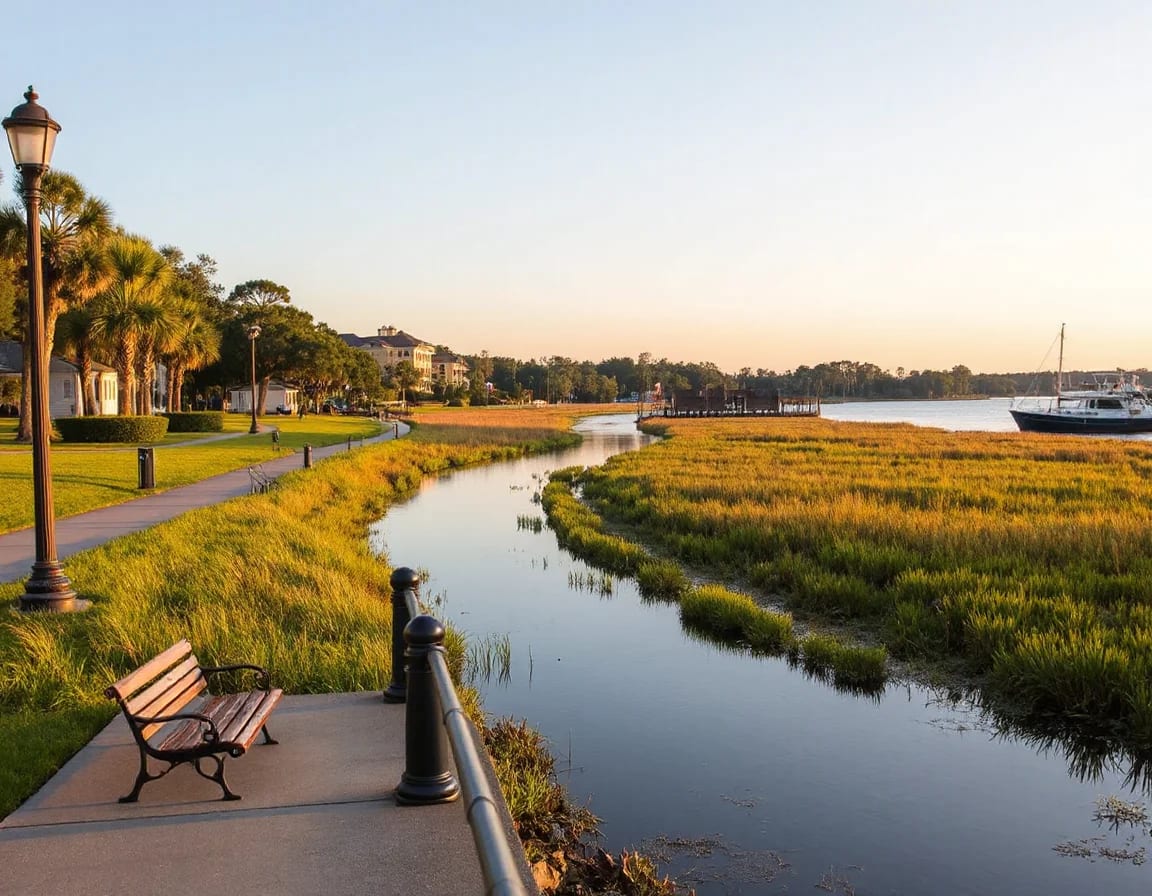
North Charleston offers a mix of marsh views, established neighborhoods, park access, and practical routes into major employment and commercial centers across the Charleston area. For buyers comparing options, the biggest advantage is variety: you can find places closer to riverfront recreation, near green space, or with easier access to I-26, I-526, and the airport depending on what matters most in your day-to-day routine. Understanding how wetlands, public amenities, and commute patterns shape each pocket of the city can make a home search far more focused.
A city shaped by water, green space, and movement
North Charleston has a neighborhood feel that is hard to reduce to one simple label. Some areas are defined by mature trees and established streets, others by newer development patterns, and many by the lowcountry landscape itself: marsh edges, creeks, retention ponds, and broad stretches of protected natural ground. That setting influences everything from views and drainage considerations to the atmosphere of an afternoon walk. Instead of feeling uniform, the city unfolds in layers, with each section offering a different balance of convenience, outdoor access, and housing style.

That landscape matters when evaluating homes. A property near wetlands may offer more open views and a sense of separation from surrounding development, but it can also raise practical questions about flood zones, insurance, setbacks, and long-term maintenance. Buyers often benefit from looking past the listing photos and studying how the lot sits, how water moves through the area, and what nearby preserved land means for future development. In North Charleston, the relationship between the built environment and the natural one is part of the decision-making process, not just a background detail.
Public parks add another important layer. Spaces such as Riverfront Park and other neighborhood recreation areas create room to walk, spend time outdoors, and enjoy views of the Cooper River and surrounding greenery. Even when a home is not directly next to a signature park, access to trails, playgrounds, open fields, and waterfront viewpoints can shape how connected a neighborhood feels. For many shoppers, that translates into a stronger sense of place than square footage alone can provide.
In North Charleston, a short drive can change the feel of a home search dramatically—marsh-adjacent streets, park-oriented pockets, and highway-access areas often appeal for completely different practical reasons.
How parks and wetlands influence everyday living
One of the more appealing parts of North Charleston is that outdoor space is not limited to a single destination. The city’s green areas and water-influenced corridors create visual breathing room across many sections, even along busier roads. That can make routine errands, morning walks, or an evening drive feel different from a more tightly built urban setting. For buyers who want to balance access to the broader Charleston region with some natural relief, this is often where North Charleston stands out.
It is also worth paying attention to how recreation is distributed. Some neighborhoods feel more connected to community parks and larger public gathering spaces, while others are stronger on regional access and daily convenience. Neither is inherently better; it depends on whether your priorities lean toward outdoor amenities, commuting efficiency, lot characteristics, or proximity to shopping and services. A thoughtful search here means comparing not just the house itself, but also the pattern of public space around it.
Because wetlands and open land are such visible features in parts of the city, they can affect how a neighborhood feels from season to season. Tree cover, marsh grasses, and water views tend to soften the edges of surrounding development. At the same time, buyers should be prepared to ask practical questions about stormwater systems, HOA responsibilities where applicable, and any environmental overlays that affect the property. A beautiful setting and a well-informed purchase can go together when the details are reviewed carefully.
Search North Charleston listings
Commute patterns are a major part of the equation
Commutes are a major reason many people consider North Charleston in the first place. The city sits in a strategic position within the Charleston metro area, with routes connecting residents to downtown Charleston, Charleston International Airport, Joint Base Charleston, major industrial corridors, and retail destinations throughout the region. Depending on the specific neighborhood, access to I-26, I-526, Rivers Avenue, Dorchester Road, or Ashley Phosphate Road can significantly affect how easy a daily schedule feels.
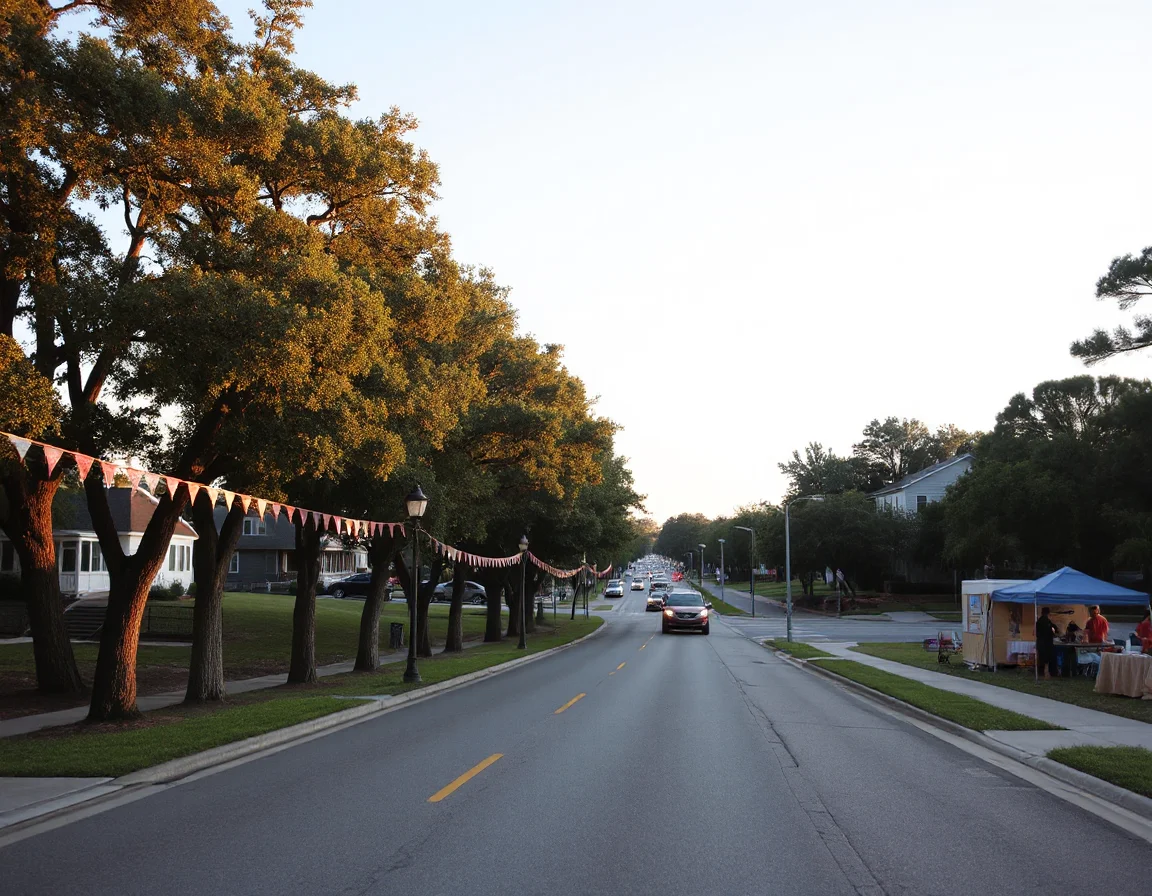
That is why it helps to think in travel patterns rather than straight-line distance. A home that appears close on a map may feel farther away if it depends on heavily traveled intersections, while another that sits slightly farther out may offer a more predictable drive because of better highway access. In practical terms, buyers should test likely routes at the times they expect to use them most. The right location is often the one that fits your weekly rhythm, not just your weekend impression.
Neighborhood feel and commuting ease do not always point in opposite directions, either. In North Charleston, there are pockets where established homes, mature landscaping, and access to parks are still paired with workable connections to employment centers and regional destinations. That blend is a big part of the area’s appeal. It allows buyers to prioritize convenience without giving up every element of scenery or neighborhood character.
For purchasers planning to stay long term, commute resilience matters almost as much as current drive time. Road improvements, commercial growth, and nearby redevelopment can all reshape travel patterns over time. Looking at a home through that lens can reveal value that is easy to miss during a fast search.
If two homes seem evenly matched, compare them by real travel time to the places you visit most often. In a market like North Charleston, route efficiency can become one of the most noticeable quality-of-life differences after closing.
Housing variety across North Charleston
North Charleston’s housing stock adds to its flexibility. Buyers can encounter ranch-style homes, brick properties in established subdivisions, townhomes with lower exterior maintenance demands, and newer construction in growth-oriented sections. Some areas emphasize lot size and mature landscaping, while others offer more updated layouts or easier access to major road networks. That range gives shoppers room to prioritize what matters most, whether that is outdoor space, age of construction, renovation potential, or a certain style of neighborhood layout.
Price points can vary significantly depending on location, condition, and proximity to key amenities or transportation routes. Homes near visible redevelopment activity or desirable access points may draw attention quickly, while properties in quieter pockets may appeal because of layout, setting, or value relative to the broader Charleston market. The key is to compare options in context. A home beside a marsh, near a park, or close to a major commuter route may be priced differently for reasons that are not obvious until you study the surrounding area.
For sellers, these same patterns matter when positioning a property. Features like green views, practical access to regional employers, or proximity to recreation can strengthen a listing when they are framed clearly and accurately. Buyers are often weighing multiple tradeoffs at once, and a well-marketed home speaks to those daily-use advantages without overstating them.
What to keep in mind while searching
If North Charleston is on your list, the most useful approach is to search with a map, a calendar, and a checklist. A map helps you identify wetlands, major roads, and park locations. A calendar helps you test traffic patterns and tour at different times of day. A checklist keeps practical issues in view, including flood insurance questions, property condition, exterior maintenance needs, and how well the neighborhood supports your regular routine.
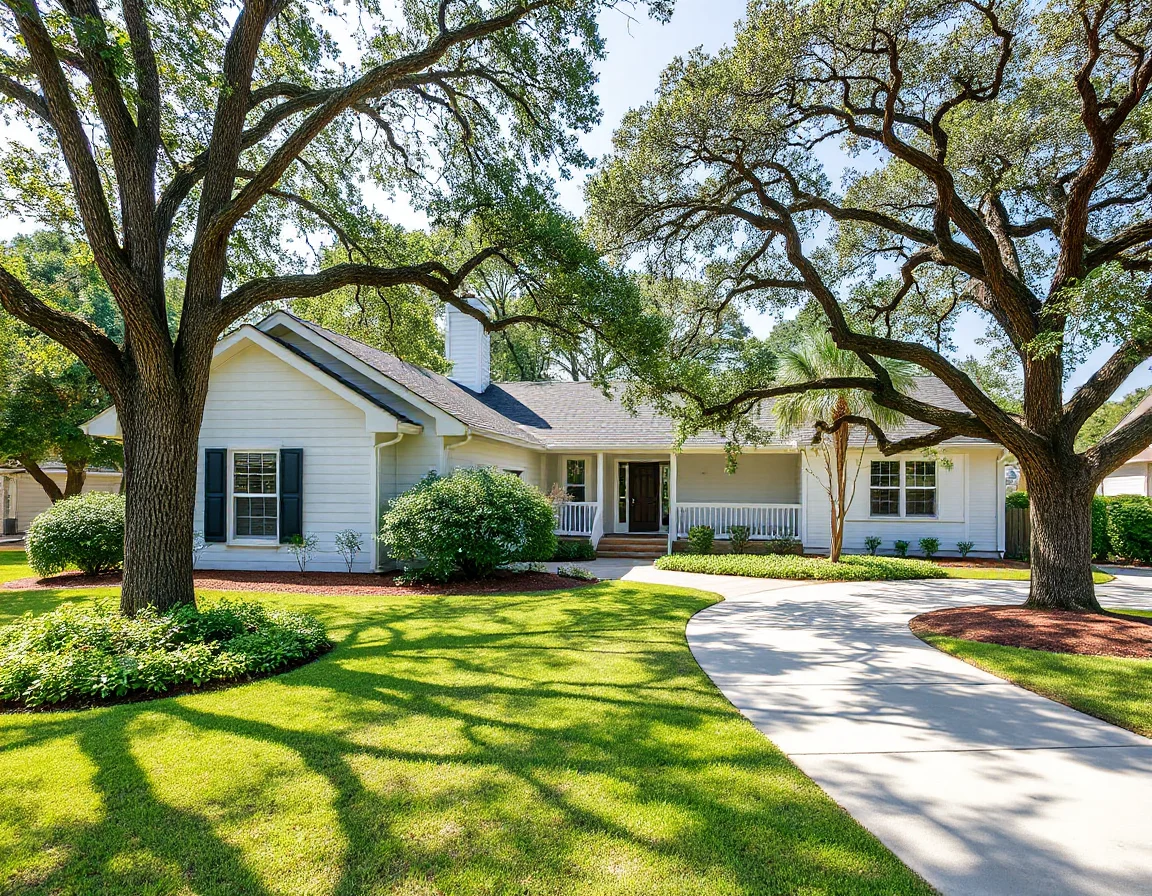
It also helps to avoid assuming that one label describes the whole city. North Charleston can feel industrial in one corridor, residential and shaded in another, and park-oriented or marsh-framed just a few turns away. That variety is a strength for buyers who want options. It means you can be selective about the combination of setting, convenience, and home style that best supports the way you live.
Ultimately, the neighborhood feel here comes from how nature and infrastructure intersect. Wetlands create open vistas and shape development patterns. Parks give residents room to gather and unwind. Commute routes connect the city to the wider region in a practical way. When those pieces line up with the right house, North Charleston can offer a compelling balance of access and atmosphere.